
CLOTHING & PERSONALISATION
An outfit can change a doll’s character without changing its head or makeup. The useful question is not just “does this look good?” It is “can I put it on, adjust it and remove it without a struggle?” Start with a look you enjoy, then check how the clothes actually open.
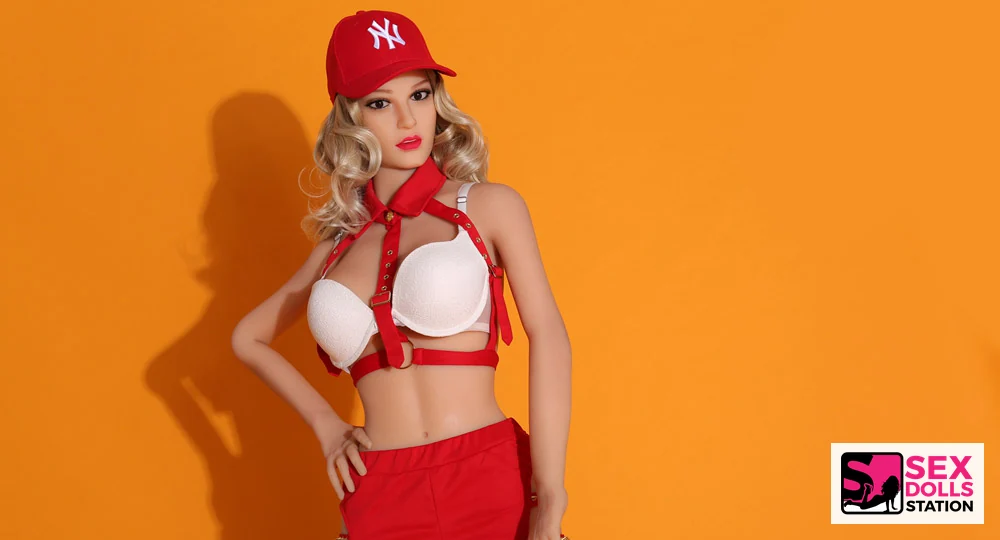
Before buying clothes: check the opening, not only the label
Lay out the route the garment must travel. A narrow cuff has to pass over a hand; a fitted neckline must clear the head unless the manufacturer’s approved dressing procedure says otherwise. A generous-looking dress can still be awkward if its zip is short. Product photographs rarely show these details, so request a picture of the back and fastening before buying.
In its dressing guidance, RealDoll notes that clothing sizes vary between brands and that a doll can need different sizes for tops and bottoms. That is a useful reason to compare the actual garment chart rather than treating a familiar size label as a guarantee. It is manufacturer guidance, not a fit test of the models shown here.
Also ask whether the measurements describe the garment laid flat, the garment circumference or the wearer it is intended to fit. Those are different things. If a seller only gives “small, medium, large” with no dimensions or fastening details, you do not yet have enough information for a confident purchase.
Ten adult outfit ideas, with one practical check for each
1. An open shirt with a simple top
A light overshirt gives you layers without committing to a complicated costume. Leave it open over a plain top for a casual portrait, or close a few buttons for a tidier silhouette. Look for an opening that continues down the front and sleeves that do not grip the wrists. Keep sharp button edges away from the surface while dressing.
2. A wrap-style dress
A dress that genuinely opens around the body may be easier to arrange than one pulled over the head. Check that it is a real wrap design: some garments merely imitate the look with a fixed front seam. Choose the drape first, then arrange the ties without pulling them tight. Adjusting a fold usually looks more natural than cinching everything firmly.
3. A coordinated two-piece outfit
Separates let you choose the top and bottom independently. Try a muted skirt with a brighter top, or repeat the same colour in two different textures. This is particularly useful when a single dress fits well in one area but not another. Before ordering a set, check whether each piece can be bought in a different size.

4. A cardigan and understated trousers
This is a good direction for a relaxed, everyday photograph. An open cardigan frames the face without needing elaborate jewellery. Examine the inside of the knit for loose loops that could catch around fingers or accessories. For the trousers, compare the waistband opening with the route needed to put them on; an elastic waist alone does not guarantee easy dressing.
5. A clean-lined evening dress
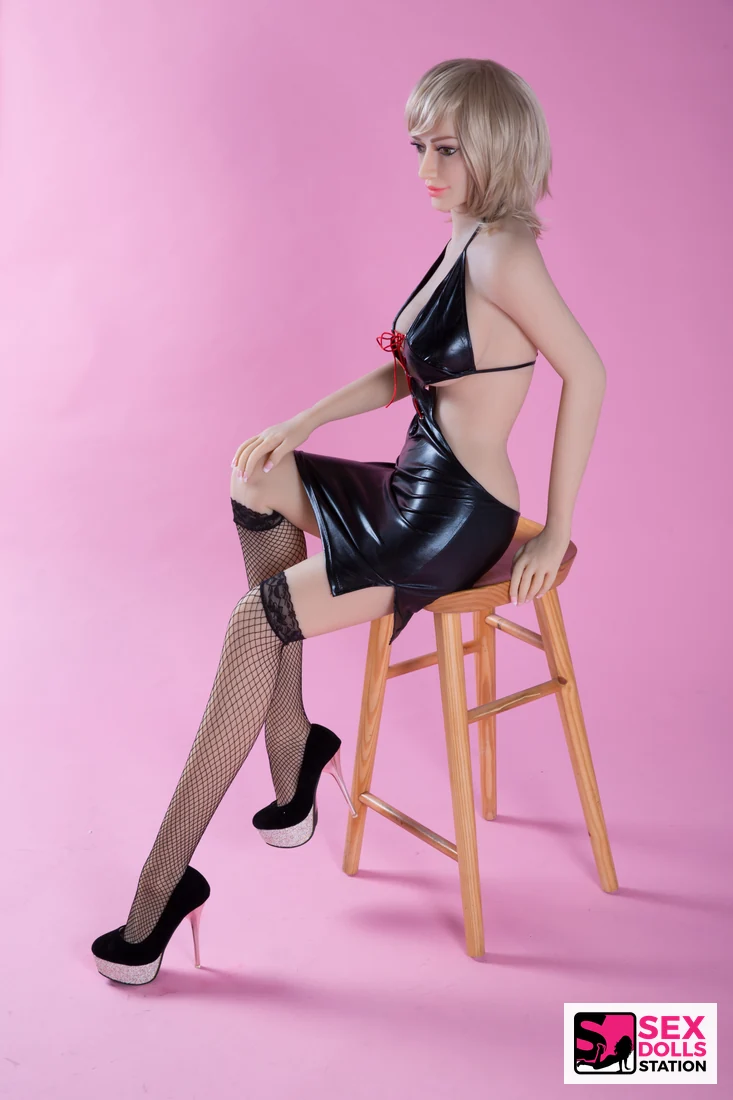
A simple evening look can rely on shape and lighting rather than many decorative pieces. Choose a dress with an accessible closure and enough room to arrange it without stretching it hard. The black dress pictured here is a styling reference, not a recommendation for leaving a coated or dark fabric against the surface. Check the actual fabric with the manufacturer.
6. A sporty zip-front layer
A zip-front jacket over a plain base gives a recognisable casual look. It also lets you work from the front instead of dragging a narrow garment over the head. Check the zipper backing and drawcord ends before they touch the doll. You can suggest an athletic style with colour and layering without forcing a demanding sports pose.
7. A retro blouse and skirt
For a vintage-inspired portrait, use a blouse collar, a gentle pattern or a skirt shape as the main feature. There is no need to combine every retro accessory at once. If you add a belt, treat it as a visual accent rather than a device for holding an ill-fitting outfit in place. Check its underside, buckle and pressure points.
8. A relaxed lounge set
A loose lounge set works well for a quiet indoor scene. It is a styling choice, not something a doll needs for warmth or comfort. Inspect seams, cuffs and waistbands just as you would for a formal outfit. “Soft” describes how a fabric feels to your hand; it does not by itself confirm that its dyes or finishes are suitable.
9. A tailored jacket over a plain base
An open jacket can create a polished portrait while leaving the underlying outfit uncomplicated. Compare shoulder width, sleeve opening and lining rather than judging only the front photograph. Avoid compensating for a tight sleeve by pulling harder on the arm. If the jacket is difficult to position, a different cut is a better starting point than a forced pose.
10. An adult fantasy-inspired layer
A cape, an open robe or one decorative accessory can suggest a fictional character without an elaborate fitted costume. Keep the theme clearly adult. Check fastenings and trim before adding them, and do not use pins, glue or adhesive decorations on the surface. If an accessory needs a mounting method, get advice specific to that doll rather than improvising.
A good colour combination is not a material guarantee
For an uncomplicated palette, choose a main neutral and one accent: grey with green, cream with red, or a single colour against a quiet background. This is an editorial styling suggestion, not a rule. The most convincing combination is often the one you can reproduce with clothes you already have, without buying a complete themed set.
RealDoll’s clothing warning identifies dark-dye transfer as a risk for its silicone dolls and recommends washing dark clothing before use. Washing should not be read as a guarantee. Ask your own manufacturer about the specific material and garment; this guide does not assign a universal safe contact time.
Look beyond the outside colour. Linings, printed logos, elastic, lace edging and coated panels may differ from the main fabric. Keep the clothing care label and seller’s material description. Our care guide is a starting point for maintenance questions, but it cannot certify a garment that has not been checked.
Build a first wardrobe around one complete look
You do not need ten purchases to try ten styles. Start with one base outfit and a layer that changes its character. Before ordering anything else, photograph what you have and write down what actually worked: which fastening was accessible, where adjustment was needed, and which accessory added something useful.
| Piece | Useful buying question | Reason to pause |
|---|---|---|
| Top or dress | How far does it open? | No back view or fastening detail |
| Bottom | Can its size be chosen separately? | Only a generic set size is supplied |
| Layer | Is the inside smooth and accessible? | Exposed hardware or snagging trim |
| Accessory | Can it sit without tight pressure? | It needs glue, pins or force |
These are screening questions, not certification criteria. A garment can pass the visual checks and still be unsuitable for the material. When you are unsure, send the label, fastening photographs and exact doll model to the seller or manufacturer before dressing it.
Prepare the photograph before adding the last accessory
Decide whether you want a face portrait, a waist-up image or a full outfit photograph. There is little reason to complicate shoes and lower layers for a head-and-shoulders picture. Set up a stable, supported position according to the model’s instructions first; do not rely on heels or clothes to make it stand safely.
Take one picture, then inspect the collar, visible seams and stray hair. Change one thing at a time. Our product-photo and configuration guide explains why a styled image should be separated from the specification you order. Keep the same distinction when saving outfit inspiration.
Common questions
Can I use ordinary adult clothing?
It can be a starting point, but select it by actual measurements, openings and material guidance. A familiar retail size is not proof of fit.
Are clothes shown on a product page included?
Do not assume so. Check the written package contents for the exact product and confirm any outfit separately before ordering.
Does stretchy fabric solve every fit problem?
No. The closure, seams and route over the hands or shoulders still matter. Stretch does not make pulling force or tight pressure appropriate.
Can a photographed outfit be left on indefinitely?
A photograph cannot answer that. Ask the manufacturer about contact with the particular fabric, dyes and finishes; no universal duration is promised here.
Models to explore with a styling plan in mind
See the current pages for Joanna 165cm — CLM Classic and Bonnie 165cm — CLM Classic. Use the listed configuration as your starting point, then confirm clothing measurements and included items. The styling images in this guide do not add garments to either package.
Already have a look in mind? Send us the product link and your clothing questions. A photograph of the garment opening is more useful than a size label alone.
